For modern R&D organizations, scientific insight alone isn’t enough to accelerate discovery. Lab productivity increasingly depends on how well teams manage their assets-from centrifuges and microscopes to robotics platforms, software, and specialized control systems. Yet most enterprise research environments still operate with fragmented tools, siloed data, and limited visibility into the full lifecycle of their assets.
The result? Underutilized equipment, duplicate purchases, rising operational costs, inefficient maintenance processes, and unnecessary downtime for scientists.
As R&D organizations scale across multiple labs, sites, and global teams, lab asset management becomes a strategic pillar for scientific productivity. Clearer visibility, streamlined workflows, and real-time utilization insights allow IT, Lab Operations, and scientific teams to work with greater accuracy, alignment, and efficiency.
This article explores the core challenges R&D teams face, how modern systems are transforming asset management, and why digital platforms-like newLab®-are becoming central to enterprise research operations.
1. The Hidden Challenges of Lab Asset Management
Enterprise R&D organizations often manage thousands of high-value instruments, each with unique lifecycle stages, usage requirements, and support dependencies. Without modern infrastructure, labs encounter recurring challenges that slow productivity and inflate operational costs.
Fragmented data across systems
Asset information is typically scattered across:
- Spreadsheets
- Shared drives
- LIMS
- ERP systems
- Email threads
- Individual lab notebooks
This fragmentation prevents teams from understanding asset availability, health, and utilization.
Limited visibility into actual asset usage
A lack of accurate utilization monitoring leads to:
- Underused assets sitting idle
- Overbooked equipment failing to meet demand
- Redundant asset purchases due to perceived shortages
Most labs estimate usage – they don’t measure it.
Redundant administrative work
Lab managers and scientists spend hours each week:
- Updating spreadsheets
- Booking instruments manually
- Chasing maintenance information
- Sharing status updates by email
These tasks create friction and slow experimentation.
Unclear cross-team communication
IT, Lab Operations, Procurement, and scientists each use different systems, processes, and terminology. Without shared visibility, labs experience:
- Bottlenecks in equipment allocation
- Delays in repairs or servicing
- Mismatched expectations around capacity and readiness
All of these challenges reduce scientific throughput and increase operational drag.
2. Why Visibility Is the Foundation of Smart Asset Management
Before R&D teams can optimize processes, they need a complete and accurate picture of every asset across sites and locations. Visibility is the foundation of effective lab asset management.
Unified, real-time data
A centralized system brings together all information about equipment, including:
- Location
- Status
- Condition
- Usage history
- Maintenance activities
- Ownership and permissions
Instead of scattered data sources, labs gain a single, reliable view of all operational assets.
Better resource planning
With clear visibility, Lab Operations can:
- Identify underused or overbooked instruments
- Shift resources to balance workloads
- Plan testing campaigns with fewer delays
- Support scientists with timely access to equipment
This transparency also reduces unnecessary purchases by revealing existing capacity.
ServiceNow as an enterprise backbone
For large R&D organizations already using ServiceNow, extending their asset-related workflows into the lab offers substantial benefits:
- Standardized data models
- Enterprise governance
- Scalable workflows across global labs
- Integrated support processes
This alignment creates a unified operational ecosystem rather than isolated lab systems.
3. From Reactive to Proactive: The Shift to Data-Driven Utilization
Modern lab asset utilization monitoring allows R&D teams to evolve from reactive management to proactive optimization.
True visibility into how assets are used
Digital utilization tracking provides real-time answers to questions like:
- Which assets are bottlenecks?
- Which instruments are underused?
- Where is capacity wasted?
- How many hours each day is key equipment available?
Accurate utilization analytics are essential for informed decision-making.
Smarter procurement decisions
When labs understand real usage, they:
- Avoid unnecessary equipment purchases
- Reduce duplicate spending across sites
- Improve budget forecasting
- Right-size their asset fleet based on demand
This aligns procurement with true operational needs rather than assumptions.
Reducing downtime through lifecycle insight
Data-driven asset management allows operations teams to predict and plan:
- Service windows
- Calibration cycles
- Workload balancing
- Replacement needs
The result is smoother workflow scheduling and fewer disruptions for scientists.
4. Collaboration Across IT, Lab Operations, and Scientists
Optimizing lab asset management is impossible without strong collaboration. Each stakeholder brings critical expertise:
IT teams
- Manage system integrations
- Ensure enterprise scalability
- Maintain secure infrastructure
- Support lifecycle governance for lab technologies
Lab Operations teams
- Oversee scheduling and availability
- Manage maintenance workflows
- Balance resource demands
- Coordinate installation and readiness
Scientific teams
- Depend on predictable equipment access
- Require minimal administrative overhead
- Need accurate, timely information
- Provide feedback on resource gaps
When all teams share a unified platform, collaboration becomes seamless. Decisions improve, complexity decreases, and labs operate with greater precision.
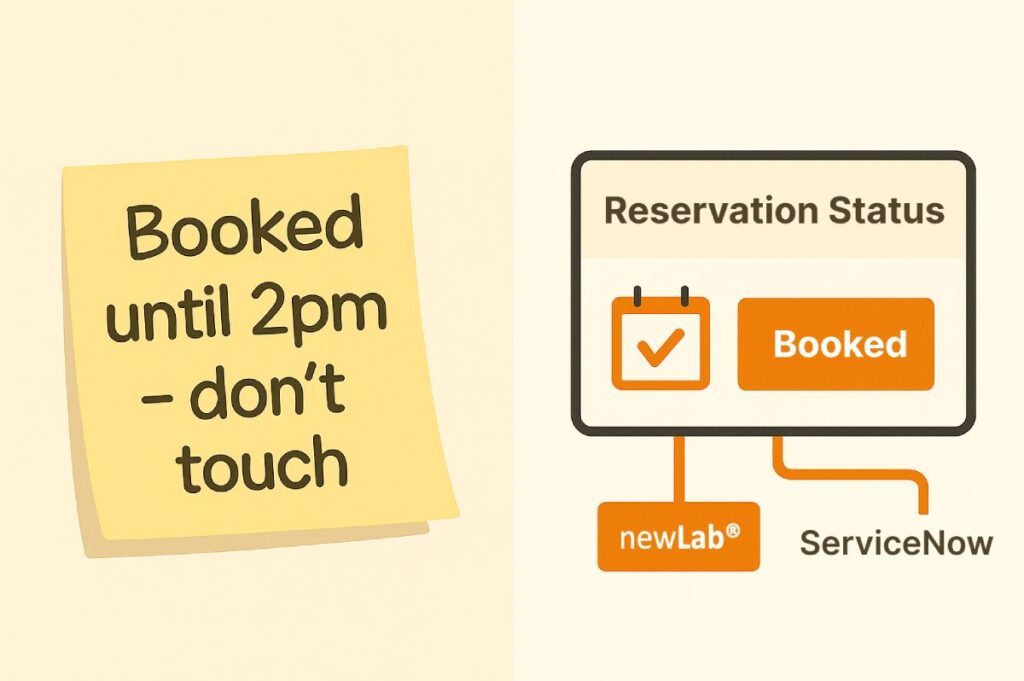
5. How newLab® Simplifies Lab Asset Management
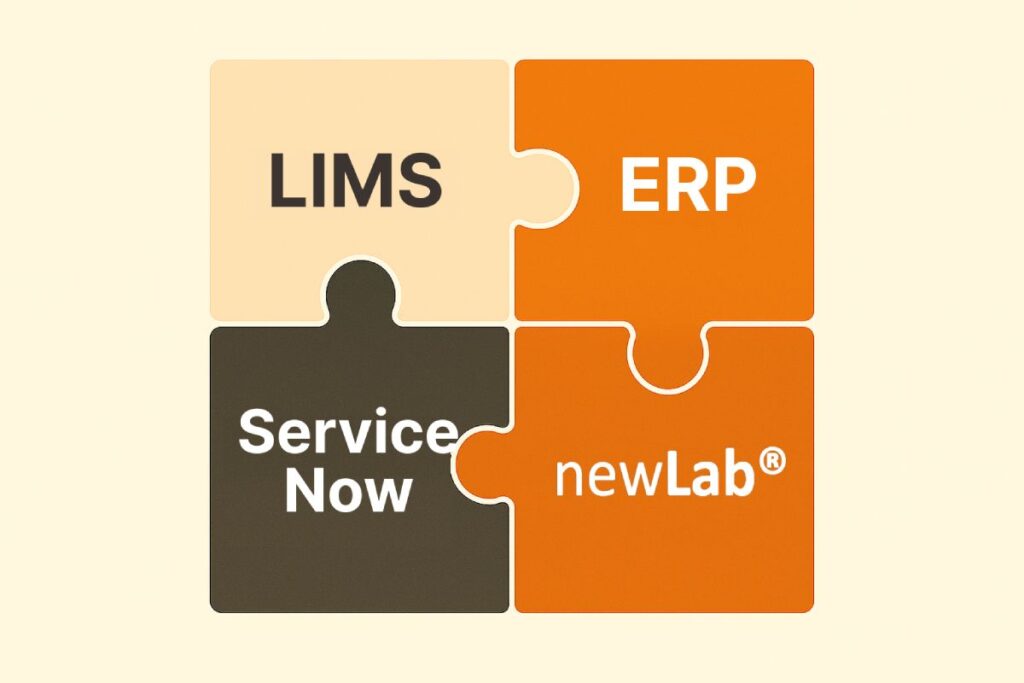
newLab® is the ultimate digital platform for managing lab resources and services, designed for enterprise R&D organizations and built natively on the ServiceNow platform.
It provides a modern framework for end-to-end lab asset management, supporting everything from visibility and scheduling to process automation and utilization analytics.
Centralized Asset Tracking
Labs gain a complete view of all equipment – across buildings, campuses, and global sites. newLab® consolidates:
- Inventory details
- Status updates
- Location data
- Ownership records
- Cost insights
This becomes a single, reliable source of truth for all lab stakeholders.
Smart Scheduling & Resource Coordination
newLab® streamlines booking processes with:
- Cross-site equipment visibility
- Real-time availability checks
- Automated scheduling rules
- Integration with service workflows
Scientists no longer rely on manual calendars or email threads to access critical assets.
Utilization Analytics for Strategic Decisions
newLab® delivers actionable insights into:
- Usage patterns
- Capacity constraints
- Underutilized assets
- Lifecycle trends
These insights inform procurement, budgeting, and long-term operational planning.
Automated Workflows
Routine tasks become automated processes, including:
- Service requests
- Asset onboarding
- Maintenance coordination
- Transfers between locations
Automation reduces manual effort and accelerates decision-making.
ServiceNow Native Integration
newLab® extends existing enterprise infrastructure, allowing organizations to scale efficiently without adding complexity or introducing new platforms. IT teams maintain full alignment between lab systems and enterprise systems.
6. The Measurable Impact: ROI and Value Table
Digital lab asset management delivers quantifiable improvements for R&D organizations. The table below summarizes common before-and-after outcomes observed when adopting platforms like newLab®.
| Area | Before Digital Asset Management | After Implementing newLab® |
| Asset Visibility | Fragmented, incomplete records across systems | Unified, real-time view across all labs |
| Asset Utilization | Low utilization and idle capacity | +25–35% improvement through usage insights |
| Procurement Efficiency | Redundant or unnecessary purchases | Data-backed investment decisions across sites |
| Collaboration | Siloed communication between teams | Integrated IT–Lab Ops–Science workflows |
| Scientist Productivity | High downtime and manual tracking | More time available for research and analysis |
These improvements compound over time, enabling more efficient R&D cycles, better budgeting, and stronger alignment across organizational units.
7. Strategic Benefits for Pharma & Biotech R&D
Effective lab asset and facility management in pharma is now critical as organizations scale scientific operations and invest heavily in new platform technologies.
Key strategic advantages include:
- Faster project execution through predictable access to equipment
- Reduced operational costs across the asset lifecycle
- Greater standardization across global R&D sites
- Improved capacity planning for high-demand scientific services
- Better data governance and shared visibility across enterprise systems
Ultimately, modern lab asset management helps organizations achieve one of their most important goals: enabling scientists to focus on discovery rather than administration.
8. Key Takeaways
- Visibility is the foundation of effective lab asset management.
- Utilization data transforms planning and prevents unnecessary spending.
- Collaboration improves when IT, Lab Operations, and scientists share one platform.
- Automation reduces administrative burden and accelerates R&D workflows.
newLab® unifies asset management within a ServiceNow-native ecosystem for enterprise scalability.

Empower your R&D teams with smarter lab asset management.
👉 Book a demo with newLab® today and see how unified visibility, automation, and utilization insights can transform your lab operations.