Preparing for an FDA audit is one of the most demanding responsibilities for any laboratory leader. In their Lab Manager article “Preparing for an FDA Inspection: What Every Lab Manager Should Know”, Michelle Dotzert, PhD, and Lauren Everett highlight the recurring issues FDA inspectors uncover in modern laboratories.
Their message is clear: many audit findings stem not from regulatory missteps, but from operational fragmentation, poor traceability, and inconsistent documentation practices.
This article distills the FDA’s expectations, explains the operational reasons labs struggle to meet them, and shows how modern platforms like newLab® help organizations eliminate the gaps that frequently lead to audit stress.
What FDA Auditors Look For During Inspections
Dotzert and Everett explain that FDA inspectors focus heavily on whether laboratory data is complete, traceable, accurate, and reproducible. As they note:
“Inspectors must verify that laboratory processes are properly documented, records are complete and accurate, and that data can be reconstructed from start to finish.”
– Dotzert & Everett, Lab Manager
Based on their analysis, FDA auditors commonly look for:
1. Complete traceability of instrument use
Who used what, when, and for which purpose.
2. Calibration and qualification status at time of use
Inspectors verify that instruments were fit for use at that moment.
3. Audit trail integrity
Evidence that data has not been overwritten, altered, or lost.
4. Metadata quality
Clear contextual information about each result or activity.
5. Reproducibility
Ability to reconstruct the scientific steps behind outcomes.
6. Controlled document and change management
Consistent use of current SOPs, forms, and approved instructions.
7. Record security and version control
Proper handling and preservation of electronic and paper records.
These expectations form the backbone of every FDA inspection – yet labs routinely fail them for one fundamental reason.
Why Labs Fail These Points: Fragmentation
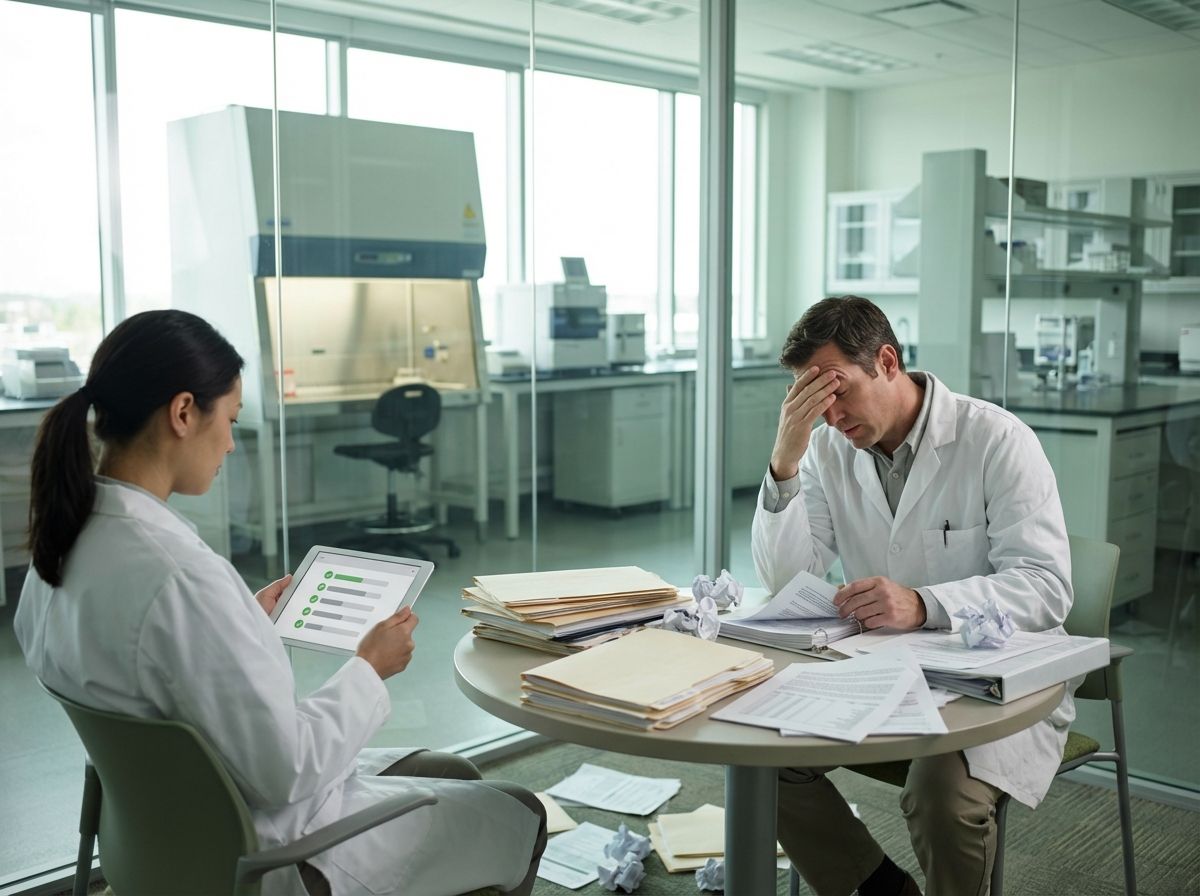
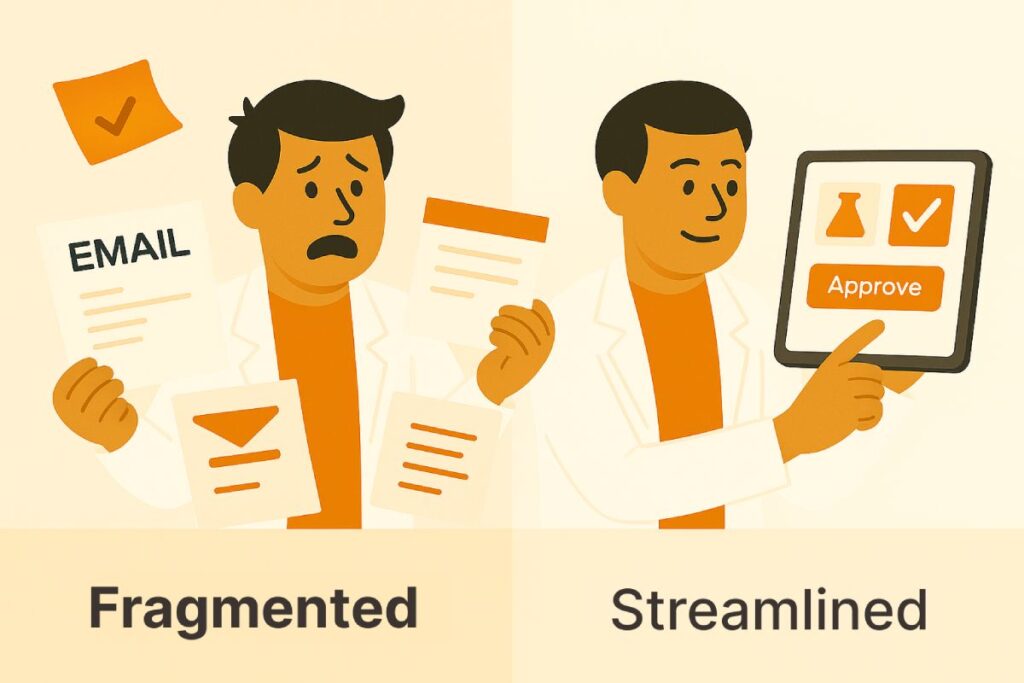
Most FDA audit issues trace back to fragmented systems and disconnected workflows.
Even world-class R&D organizations still operate on:
- LIMS for scientific data
- ELN for experiment notes
- Spreadsheets for asset logs
- Shared drives for certificates
- Maintenance/vendor portals for calibration
- Outlook/Google calendars for bookings
- Paper logs for daily instrument use
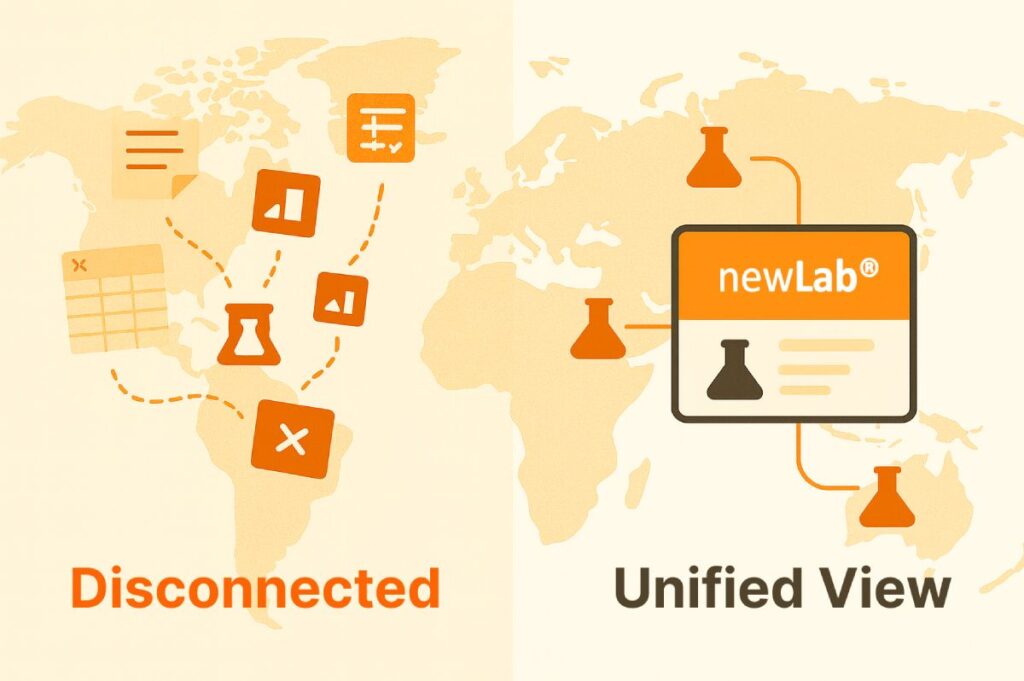
None of these systems talk to each other.
This fragmentation creates the gaps FDA auditors consistently identify:
• Incomplete instrument traceability
Usage logs exist in one system, maintenance in another, and calibration records in someone’s email.
• Calibration status not linked to bookings
Scientists may unknowingly use equipment that is pending calibration because the scheduling system is disconnected from certificate storage.
• Weak audit trails
Manual entries, spreadsheets, and uncontrolled change history lead to inconsistent or irreconcilable records.
• Missing metadata
Contextual information lives across multiple files and tools, making reconstruction difficult.
• Poor reproducibility
Fragmented documentation makes it hard to show the repeatability of scientific steps.
• Uncontrolled documents
Teams rely on outdated SOPs or forms circulating informally.
• Record version confusion
Without a unified operational system, different teams maintain different versions of the same record.This fragmentation – not regulatory failure – is what creates audit stress and exposes the lab to avoidable findings
How newLab® Solves the Operational Problems Behind FDA Audit Findings
To address these challenges, the following sections map each FDA expectation to the typical operational failure behind it, and how newLab® helps teams resolve that gap:
1. Complete Traceability of Instrument Use
FDA expects:
Clear visibility into who used which instrument, when, and under what conditions.
Labs fail because:
Usage logs live in spreadsheets, calendars, or paper sheets – often incomplete or outdated.
How newLab® helps:
newLab® centralizes equipment reservations, usage logs, and activity records in a single platform, ensuring complete and consistent operational traceability without relying on manual data entry.
2. Calibration & Qualification Status at Time of Use
FDA expects:
Proof that the equipment was calibrated and qualified at the moment it was used.
Labs fail because:
Calibration certificates live in shared folders or emails; scheduling tools do not know whether an instrument is calibrated.
How newLab® helps:
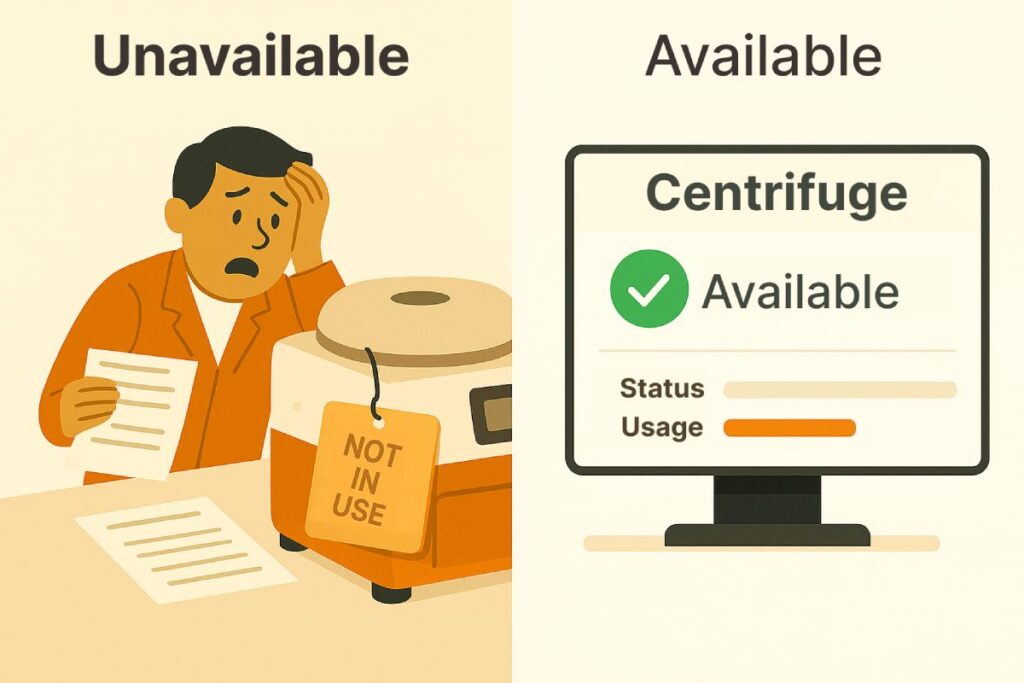
newLab® links calibration documents, maintenance events, and booking workflows.
If equipment is unavailable, pending service, or overdue for calibration, that status is reflected operationally – preventing accidental use.
3. Audit Trail Integrity
FDA expects:
A reliable sequence of actions that is accurate, chronological, and complete.
Labs fail because:
Manual logs, spreadsheets, and disconnected tools do not provide consistent change tracking.
How newLab® helps:
newLab® structures operational activity into digital workflows, automatically recording each step and reducing the risk of missing or inconsistent data.
4. Metadata Quality
FDA expects:
Clear contextual information – who performed the action, under which conditions, using which instrument settings.
Labs fail because:
Metadata is scattered across systems, missing entirely, or captured inconsistently.
How newLab® helps:
newLab® ensures metadata related to instrument usage, service requests, and operational workflows is captured and stored systematically.
5. Reproducibility
FDA expects:
That labs can reconstruct the scientific and operational steps behind results.
Labs fail because:
The operational sequence (equipment booked → used → maintained → updated) is not documented cohesively.
How newLab® helps:
newLab® provides a unified view of operational activity, making it easier for teams to retrace steps without depending on scattered files.
6. Controlled Document and Change Management
FDA expects:
Teams must use the most current procedures and document revisions.
Labs fail because:
SOPs, forms, and versioned files circulate informally across teams.
How newLab® helps:
newLab® structures operational workflows so scientists and lab managers interact with standardized, up-to-date processes – reducing reliance on uncontrolled documents.
7. Record Security and Version Control
FDA expects:
Protected, version-controlled records that remain accessible.
Labs fail because:
Files live in emails, personal folders, or uncontrolled cloud storage.
How newLab® helps:
newLab® centralizes operational records with controlled access and structured workflows, ensuring teams reference consistent, current information.
FDA Audit Readiness Begins With Operational Excellence
As Dotzert and Everett highlight in Lab Manager, the FDA’s inspection process is fundamentally about traceability, accuracy, and operational discipline. Most audit findings arise not from regulatory failings, but from fragmented systems and inconsistent documentation practices.
Modern platforms like newLab® help laboratories strengthen the operational backbone that supports clean data, reproducible processes, and strong traceability – reducing the gaps that FDA auditors consistently identify.
Not because newLab® provides compliance capabilities, but because it helps teams operate with far greater clarity, structure, and control.
Beyond the FDA Audit: From Inspection Pressure to Continuous Improvement
FDA audits often act as a spotlight on operational weaknesses that already exist long before inspectors arrive. The most resilient laboratories do not treat inspections as one-time events, but as opportunities to strengthen how data, equipment, and workflows are managed across the lab.
By reducing fragmentation, improving traceability, and standardizing operational processes, organizations move beyond reactive audit preparation toward continuous improvement. This shift not only reduces inspection stress, but also enables more efficient day-to-day operations and a stronger foundation for future digital initiatives.
If your team is working to strengthen lab operations, improve data accuracy, or unify equipment and workflow visibility, newLab® can help.
Book a demo to explore how modern lab platforms streamline day-to-day processes and reduce operational gaps.