
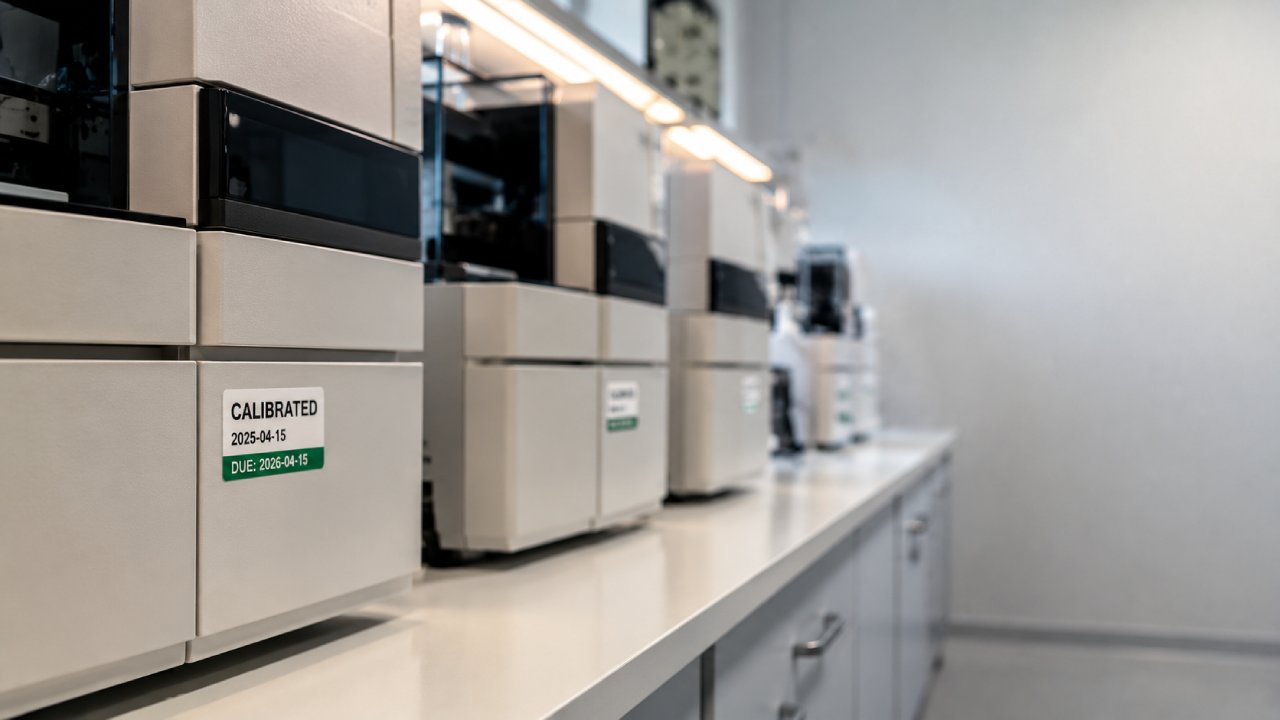
A scientist runs a two-week assay. The data looks clean. Then someone checks the instrument record and finds that the calibration date had passed before the run started. The results are not questionable. They are unusable. The reagents are gone, the instrument time is gone, and the study slips while the work repeats.
That failure is common, and it rarely starts in the calibration log. It starts at the booking, when nobody could see the instrument’s calibration state before reserving it.
This article covers how equipment calibration tracking protects the validity of your results, and why that protection depends on where the calibration data lives. It does not cover compliance reporting, and newLab® is not a compliance reporting tool. newLab® also does not pull readings off your instruments.
The focus here is operational: keeping calibration status visible at the one moment a bad run can still be prevented.
What does equipment calibration tracking actually control
Equipment calibration tracking is the practice of recording, for every instrument, when it was last calibrated, how often it needs recalibration, the tolerance it must hold, and whether it currently sits inside that window. Dates, intervals, tolerances, status. That is the whole record.
This is operational data, not scientific data. It does not describe an experiment’s results. It describes the condition of the device that produced them. And that condition decides everything downstream. The moment a calibration interval lapses, every measurement the instrument takes falls outside its verified range.
The experiments running on it become invalid, and the results they produce become unusable. The science can be flawless and the output still worthless, because nobody confirmed the instrument was measuring accurately when the work ran.
Where calibration management breaks down
Most labs track calibration. The breakdown is not the tracking itself. It is the distance between the record and the people who need it. Calibration management often lives in a spreadsheet, a facilities system, or a binder that the metrology team updates and almost nobody else opens. The data exists. It just sits somewhere the scientist booking the instrument never looks.
That gap carries a cost, and the cost compounds because nobody sees it until late.
What does missed calibration actually cost
- Wasted reagents and instrument time. A run on an out-of-calibration instrument consumes the same reagents, the same hours, and the same analyst attention as a valid run. The difference is that all of it gets discarded. You pay full price for a result you cannot use.
- The lag before anyone notices. The missed date and the discovery rarely happen together. The instrument keeps running and the queue keeps moving, so the gap usually surfaces during analysis or review, days or weeks later, after the spend is already sunk.
- The credibility hit when results get pulled. When a lab retracts a result and reruns a study, the people waiting on that data lose time and confidence. A program slips, a decision waits, and the lab carries the reputation for it.
Why does calibration data have to live where booking happens
Here is the part most calibration programs miss. The reservation is the decision point. When a scientist books an instrument, the lab commits reagents, schedule, and analyst hours to it. If the calibration state is invisible at that moment, the commitment goes ahead blind. The booking is where a failed experiment gets set in motion, and it is the last place to stop it cheaply.
So the question is not whether the lab tracks calibration. It is whether the calibration record reaches the booking. A calibration log in a separate system is accurate and useless at the same time, because it sits in a place the scientist never sees while reserving the instrument. Connect the two, and the out-of-calibration instrument never gets reserved in the first place. The failure does not get caught later. It does not happen.
What calibration-aware booking changes
- The conflict surfaces before the work, not after. When calibration status appears at the reservation, an instrument that is due or overdue shows it immediately. The scientist reschedules or picks another device before a single reagent is spent.
- Out-of-calibration instruments come out of the booking pool automatically. A business rule in newLab® makes the device unavailable for reservation the moment its calibration date passes due. The scientist cannot book an instrument that should not run, and the metrology team does not have to gatekeep every reservation.
- One operational record replaces the reconciliation. Nobody has to match a calibration spreadsheet against a booking calendar by hand. The status and the schedule sit together, so there is nothing to cross-check and nothing to miss.
- The two teams finally see the same data in their preferred systems. Metrology keeps its specialized calibration tool, which handles the precision and traceability that work requires. newLab® synchronizes the calibration data from that system into the operational record scientists use to book instruments, so neither team has to switch tools and neither team works from a stale copy.
The compliance pressure behind all of this
There is a reason calibration records carry this much weight, and it sits outside the lab. In pharma and biotech, regulatory teams and external auditors expect calibration records to be current and traceable. An instrument used in a study has to show it was calibrated when the work ran.
When those records are scattered or stale, the lab cannot answer that question quickly, and the gap becomes a finding waiting to happen.
That pressure lands on IT Directors and Lab Operations Managers as a real buying criterion. They carry lab compliance expectations whether or not they own the science, because the operational record is what an audit examines. This is the reader’s environment, not a feature claim. newLab® does not manage your compliance, generate compliance reports, or prepare you for an audit.
Its role here is narrower and operational: keep the record that describes the lab, calibration status included, organized and current, so the people who answer those questions work from data they can trust.
How newLab® fits
newLab® is the operational backbone for lab infrastructure data, built natively on ServiceNow. It centralizes the records that describe your lab environment: the equipment inventory, the asset taxonomy, the maintenance histories, and the calibration status synchronized from the metrology team’s tool.
Because the booking layer lives in the same system, newLab® surfaces calibration status at the point of reservation. The calibration data comes from the specialized tool the metrology team already runs; newLab® synchronizes that data into the booking view, so the scientist and the metrology team see the same status in their preferred systems.
A business rule in newLab® can take this further and remove an instrument from booking automatically the moment its calibration date passes due, so a scientist cannot reserve an out-of-calibration device by mistake.
Be precise about the boundaries. newLab® does not connect to your instruments, and it does not extract calibration readings or scientific data automatically. It holds the operational record that people and systems maintain, and it makes that record visible where decisions get made.
It also does not replace your LIMS or ELN. ELNs and LIMS manage experiment design and scientific data capture. newLab® manages the lab infrastructure and the operational context around that work. The two layers do different jobs, and the lab needs both.
This is where broader equipment tracking earns its keep. newLab® treats calibration as one thread inside the full lifecycle of every instrument, so status, maintenance, and reservations sit in one place instead of three.
| Calibration data disconnected from booking | Calibration status visible at booking | |
| When the problem surfaces | After analysis, when results are reviewed | At reservation, before the work runs |
| Instrument reserved past due date | Possible, nobody is alerted | Blocked or flagged at booking |
| Result validity | At risk, often discovered too late | Protected by gating the booking |
| Cost of the gap | Repeat the experiment | Reschedule before any work is lost |
| Who catches it | The analyst, weeks later | The system, at the moment of booking |
Go back to the assay thrown out after two weeks. The lab had the calibration record the whole time. The metrology team knew the date. The one person who needed it, the scientist reserving the instrument, never saw it, because the record lived somewhere the booking did not reach. That is the entire failure. Not a missing log. A log nobody could see at the moment it mattered.
Calibration tracking protects your results only when the status reaches the reservation. Keep the two connected, and the out-of-calibration run stops being something you catch in review. It becomes something that never happens.
To see how newLab® surfaces calibration status at the point of booking, book a demo.
FAQs
What is equipment calibration tracking?
It is the practice of recording each instrument’s calibration dates, intervals, and current status so the lab knows whether a device is fit to use. Tracked well, it decides whether the results from that instrument can be trusted.
How does a missed calibration date affect experiment results?
Work run on an out-of-calibration instrument is invalid, which makes the results unusable. The cost rarely shows at run time and usually surfaces during analysis, after the reagents and hours are already spent.
Why connect calibration tracking to instrument booking?
The reservation is the moment a problem can still be prevented. When calibration status is visible at booking, an out-of-calibration instrument never gets reserved, which is what stops the failed experiment.
How is calibration management different from maintenance tracking?
Maintenance keeps an instrument running; calibration management confirms it measures accurately within tolerance. Both are operational records, but calibration is the one that decides whether a result is valid.
Does newLab® connect to instruments or pull calibration readings automatically?
No. newLab® holds the operational record and makes calibration status visible at booking; it does not connect to instruments, extract readings, or replace your LIMS or ELN.